Montessori Materials
In a Montessori elementary classroom, materials are far more than tools; they are essential pathways to understanding. These scientifically designed materials help children move from concrete experiences to abstract thinking, supporting both curiosity and deep comprehension.
1. Concrete to Abstract Learning
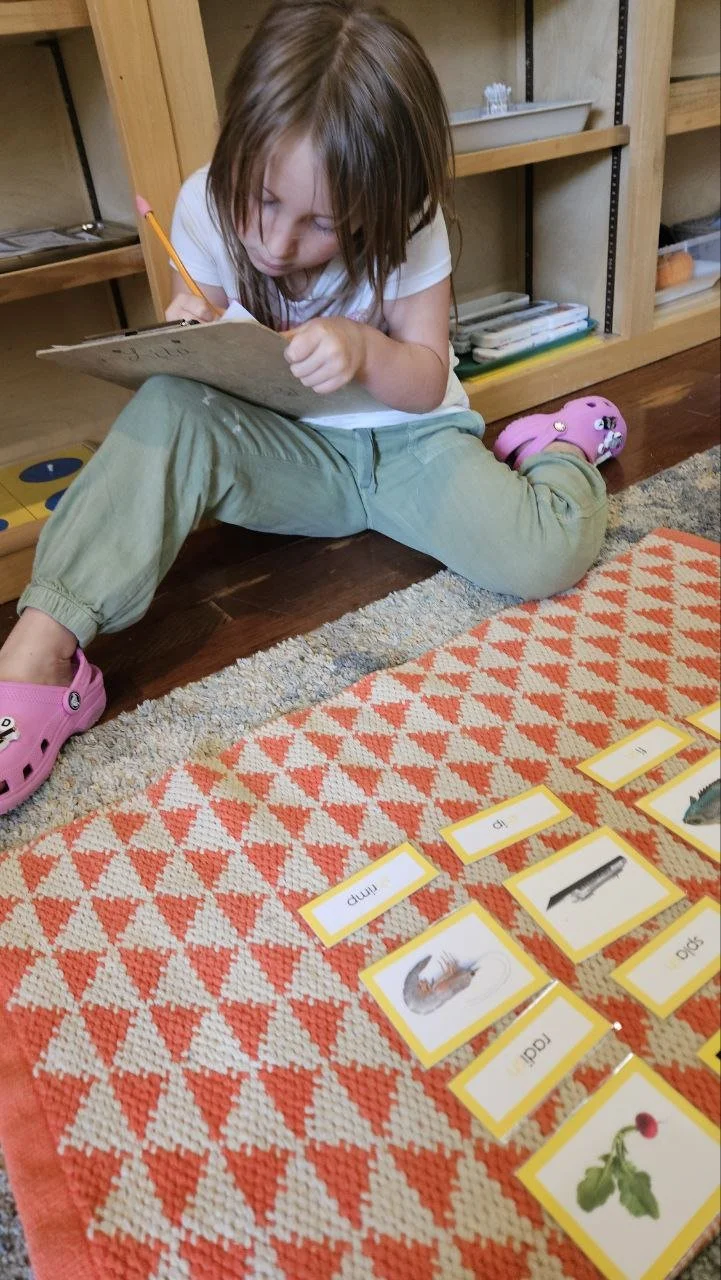
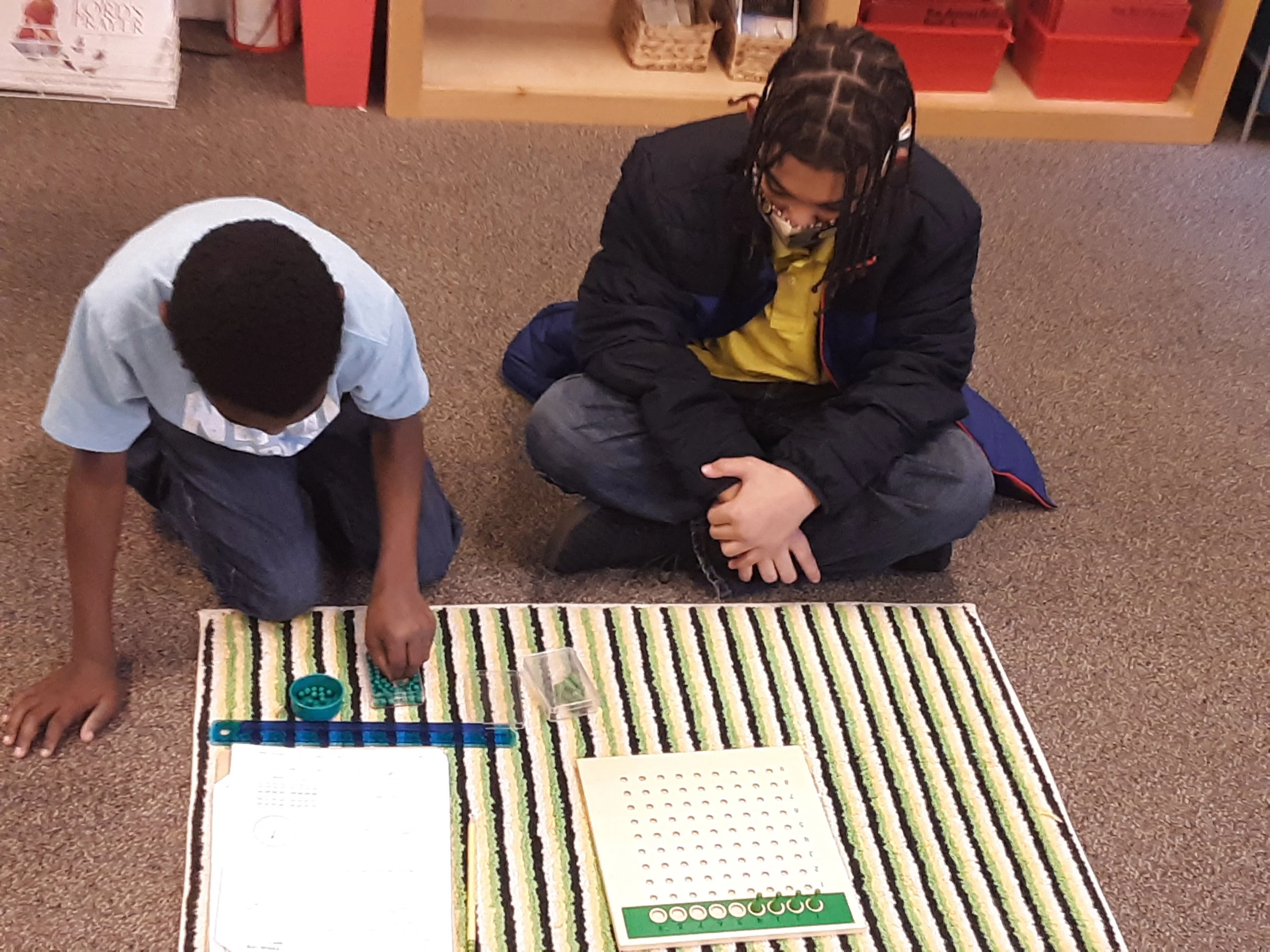
Montessori elementary students are in a powerful stage of development in which their imaginations are expanding, and their reasoning minds are growing. The materials bridge these inner shifts by starting with hands-on, tangible experiences. For example, children use bead bars to explore multiplication, or grammar symbols to understand sentence structure. As they manipulate these objects, they build mental models that prepare them for abstract thinking later on.
2. Independent Discovery and Mastery
Montessori materials are self-correcting, meaning children can see and fix their mistakes without adult intervention. This fosters independence, confidence, and a love of learning. Students are not just told facts — they discover them. This process of exploration and mastery helps children truly understand what they are learning.
3. Collaboration and Inquiry
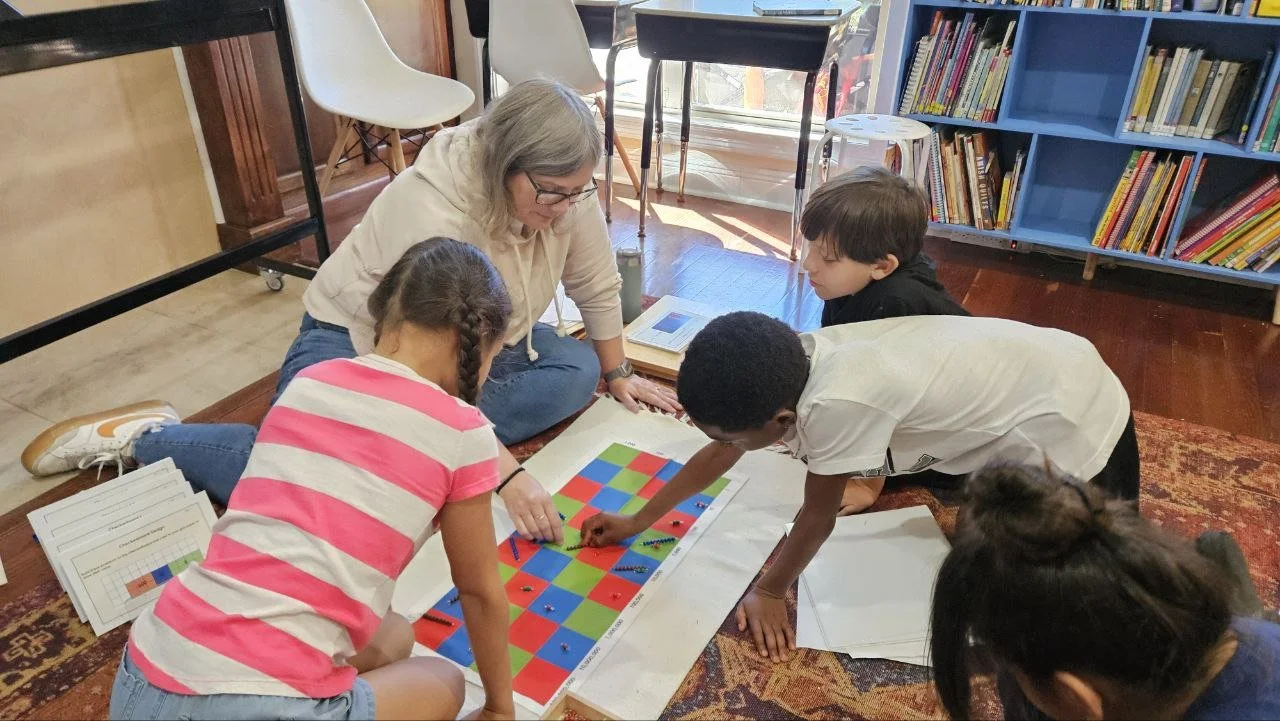
In the elementary years, children are naturally social and curious. The Montessori materials support group work, shared investigations, and meaningful conversations. Whether working on a large-scale timeline of history or measuring angles with a protractor, students engage deeply and collaboratively in their work.
4. Nurturing the Whole Child
Materials in a Montessori classroom are carefully chosen to meet not only academic needs but also developmental ones. They inspire beauty, order, and a sense of purpose. A well-prepared environment filled with inviting, purposeful materials speaks to the child’s dignity and potential.
Montessori Elementary Classroom
In our Montessori elementary classroom for ages 6–12, children learn in a Christ-centered environment where curiosity, independence, and purpose are nurtured every day. Students are guided by teachers who know them deeply and who create a beautiful, orderly space—indoors and outdoors—where meaningful work is always within reach. Practical life skills, hands-on exploration, and student-led learning shape the rhythm of the day, encouraging children to take responsibility for their growth. Here, learning is balanced, thoughtful, and rooted in the development of the whole child—mind, body, and spirit.